
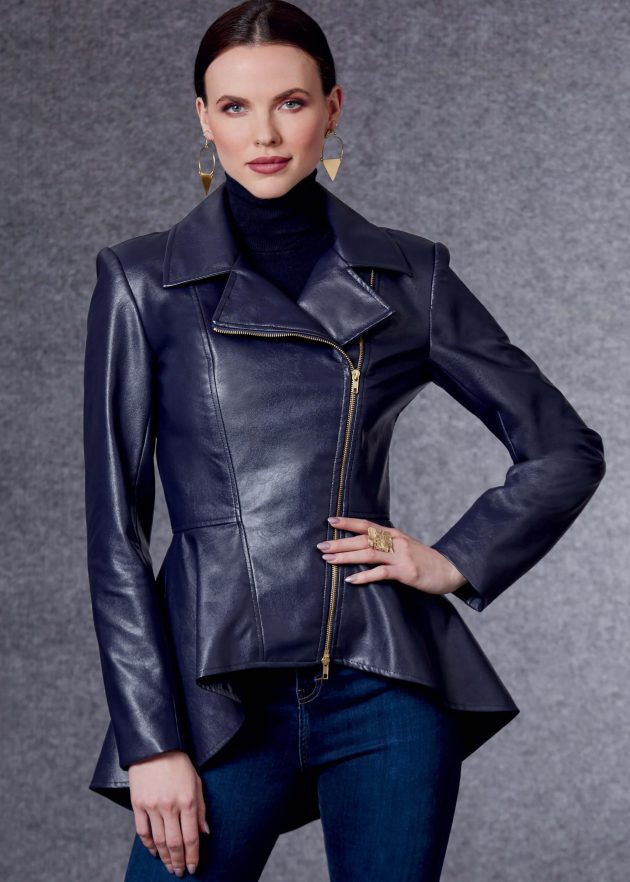
Leather Jacket Sewing Patterns
Have you considered trying a leather or faux leather jacket sewing pattern? The history of leather jackets traces back to the early 1900s, primarily as functional garments for aviators and military personnel; But they’re still popular today as a fashion statement piece.
They also provide the chance to test a new sewing skill! Make sure to read our guide to sewing with leather and leatherette before getting started.
Keen to see more? Check out our leather and suede jacket sewing patterns for women and men.
-
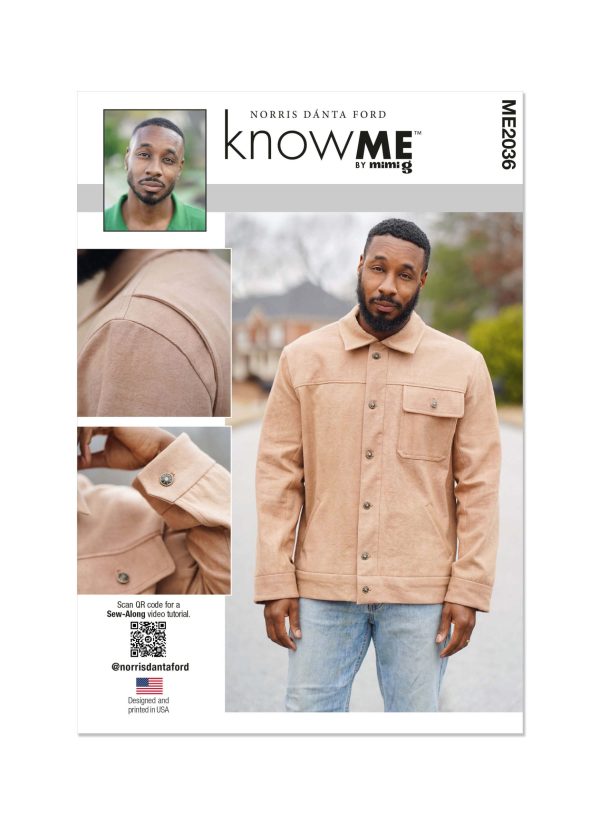
Know Me Sewing Pattern ME2036 Men’s Jacket
£14.50 -
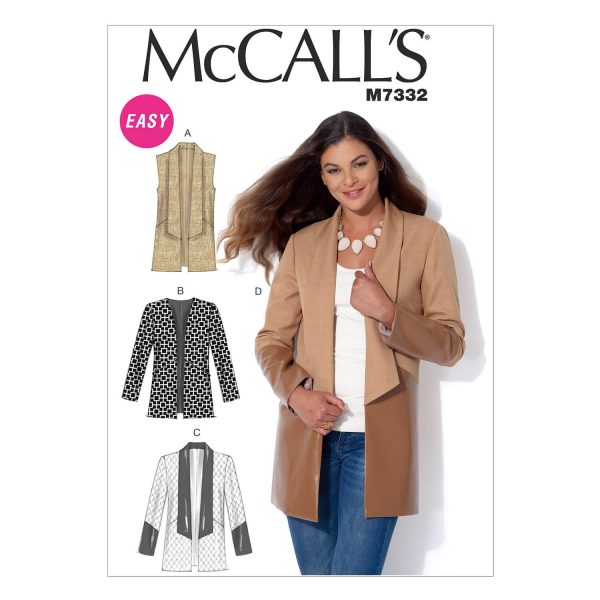
McCall’s Sewing Pattern M7332 Misses’ Open Front Vest and Jackets
£14.50 -

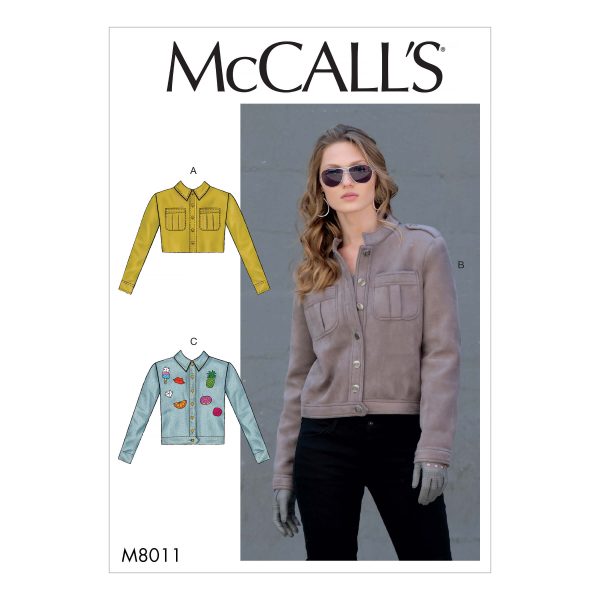
McCall’s Sewing Pattern M8011 Misses’ Jackets
£14.50 -

Know Me Sewing Pattern ME2011 Men’s Moto Jacket by Norris Dánta Ford
£14.50 -
McCall’s Sewing Pattern M8188 MOTO Jacket
£10.75 -
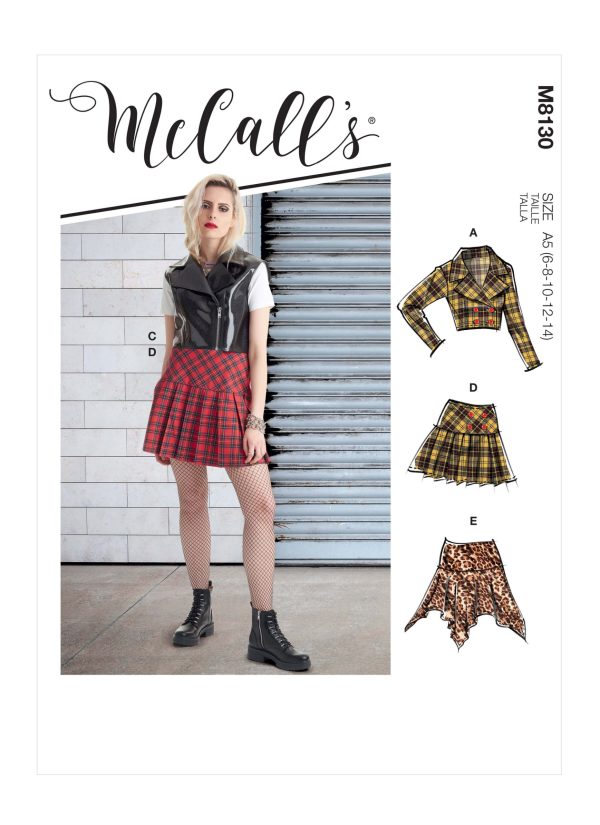
McCall’s Sewing Pattern M8130 Misses’ ‘Pop culture’ Jacket and Skirts
£10.75


Are leather jacket sewing patterns still available?
We regularly include modern versions of leather jacket sewing patterns in our pattern range because of their enduring popularity! Here’s a brief overview of the history of leather jacket fashion:
- Early 1900s: Leather jackets were initially designed for practicality rather than fashion. During World War I, pilots and military personnel began wearing leather flight jackets to protect themselves from the harsh conditions at high altitudes. The A-1 and A-2 flight jackets, made of sheepskin or horsehide leather, became iconic during this period.
- 1930s-1940s: Leather jackets gained further prominence in popular culture during the 1930s and 1940s, particularly with the rise of Hollywood and the depiction of tough-guy characters like cowboys, gangsters, and rebels. Actors like Marlon Brando in “The Wild One” (1953) and James Dean in “Rebel Without a Cause” (1955) cemented the leather jacket’s association with youth rebellion and counterculture.
- Interwar Period: After World War I, surplus military jackets became available to civilians, contributing to the popularisation of leather jackets among civilians, especially motorcyclists. The jackets provided protection against the elements while riding motorcycles, as well as offering a rugged, rebellious image.
- 1950s-1960s: The leather jacket continued to be a symbol of rebellion and masculinity throughout the mid-20th century, with its popularity spreading among various subcultures such as rockers, greasers, and bikers. Motorcycle clubs like the Hells Angels adopted leather jackets as part of their uniform, further solidifying their association with rebellion and nonconformity.
- 1970s-1980s: The punk movement of the 1970s brought a new wave of interest in leather jackets, as they became a staple of punk fashion. Bands like The Ramones and The Sex Pistols popularised leather jackets as part of their edgy, anti-establishment aesthetic. Additionally, the emergence of heavy metal and glam rock further cemented the leather jacket’s status as a symbol of rock ‘n’ roll rebellion.
- 1990s-Present: Leather jackets have remained a timeless fashion staple, evolving with trends while maintaining their iconic status. They continue to be embraced by various subcultures, from motorcyclists to musicians, and have become a versatile wardrobe piece worn by people of all ages and backgrounds.
Can I sew with faux leather?
Faux leather and faux suede have surged in popularity due to ethical concerns, technological advancements, affordability, durability, and versatile design options. As consumers seek cruelty-free and sustainable alternatives, these synthetic materials offer a stylish and accessible choice across various fashion and lifestyle products.
Modern faux/synthetic leathers and suedes are great to work with and look fabulous without ethical issue. They are similar in look and feel to their natural counterparts, they rarely need neatening and can be handled in the same manner when seaming and constructing a garment. Varieties include faux suede, suedette, ultra suede, leatherette and pleather.