Corset sewing patterns
Corset sewing patterns have been a reoccurring staple in sewing circles as a way to learn new skills, excellent for fans of historic dress or costume, and perfect for special occasion wear.
As a modern fashion piece, corsets have been reinterpreted by designers compared to historic versions, worn as outerwear rather than underwear. They are very popular as prom and wedding pieces but are also loved in certain subcultures, such as steampunk fashion and cosplayers.
Some people confuse corsets with bustiers! An easy differentiator between the two is that a bustier accentuates the bust while a corset works on the waist.
Modern corset styles
-
 Simplicity Sewing Pattern S9779 Misses’ Dress in Two Lengths by Madalynne Intimates£10.50
 -
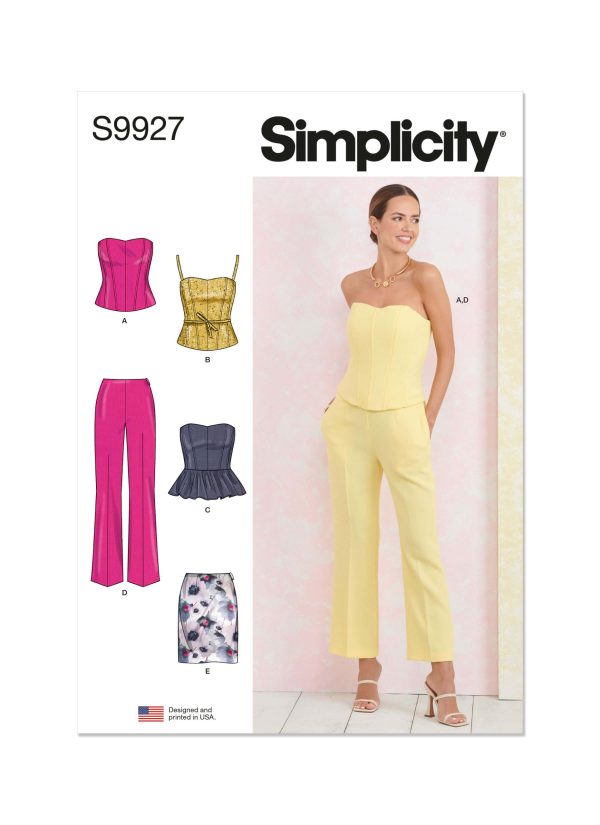 Simplicity Sewing Pattern S9927 Misses’ Corsets, Trousers and Skirt£10.75
 -
 Simplicity Sewing Pattern 1183 Misses’ and Plus Size Corsets
 -
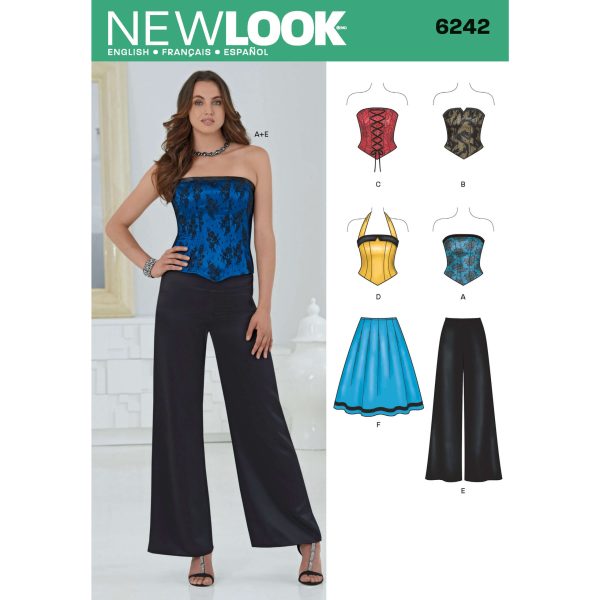
New Look Sewing Pattern N6242 Misses’ Corset Top, Trousers and Skirt
-
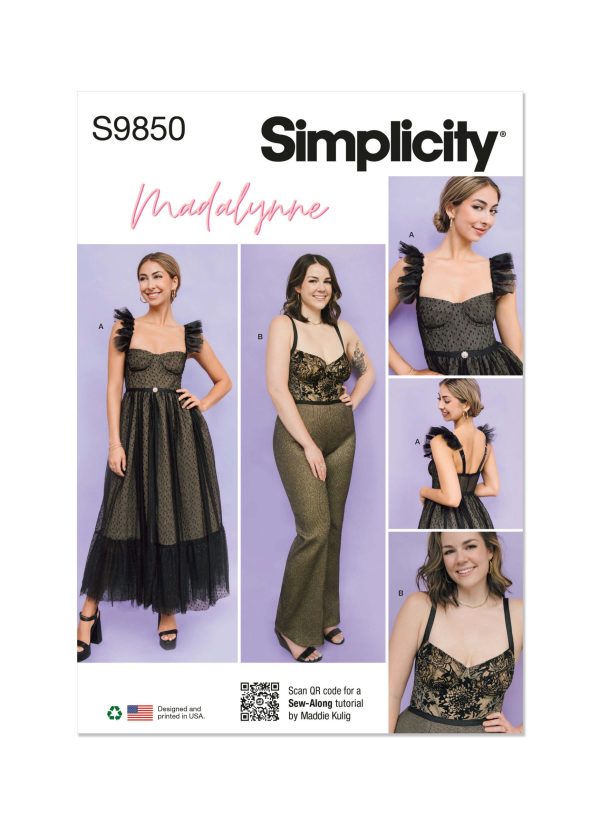
 Simplicity Sewing Pattern S9850 Misses’ and Women’s Dress and Jumpsuit by Madalynne Intimates£10.50
 -
Vogue Patterns V1876 Misses’ Corsets£19.50
-
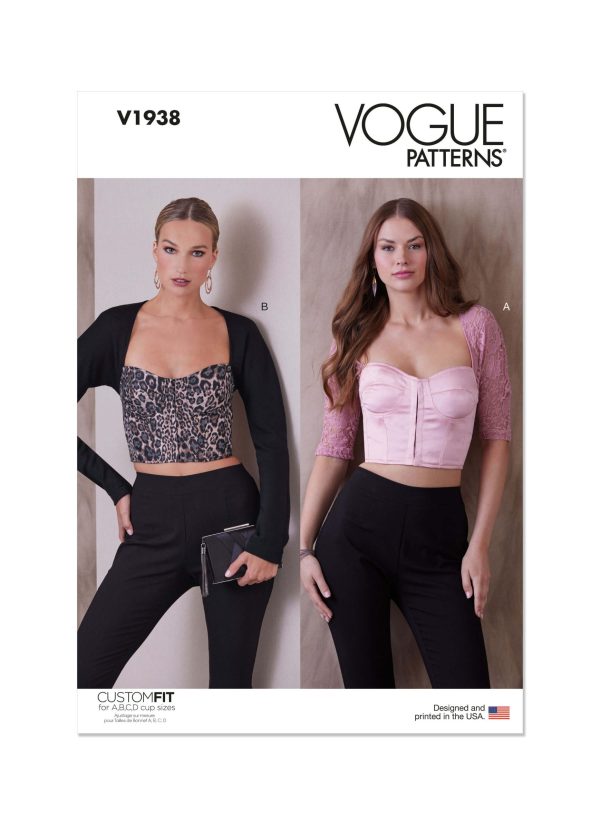
Vogue Patterns V1938 Misses’ Corset Tops
-
Simplicity Sewing Pattern S9922 Misses’ Corsets£10.50


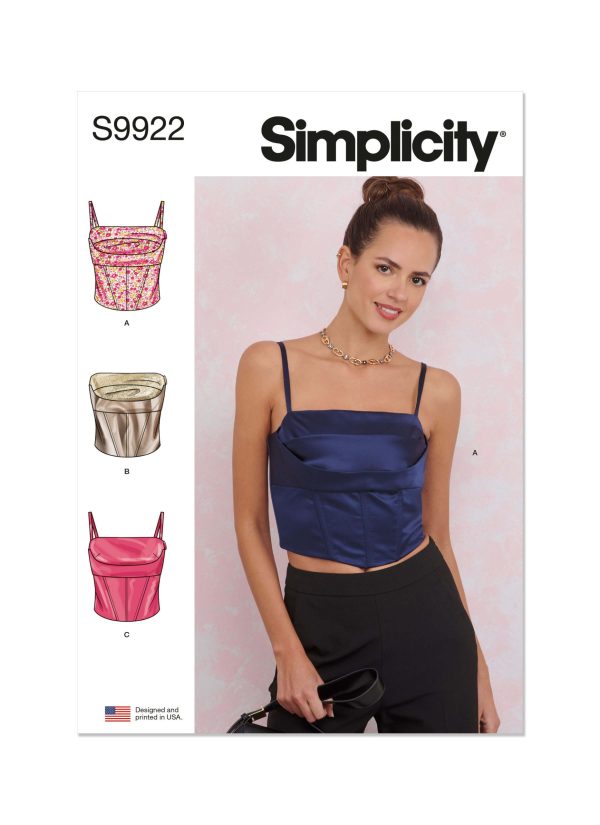
History of corsets
In the 17th to 18th Century corsets became increasingly popular and were worn by women across various social classes. They were constructed with whalebone or metal stays and laced tightly to create the fashionable silhouette of the time, emphasising a conical torso shape with a small waist. And the Victorian era is perhaps the period most commonly associated with corsets as an essential undergarment for women, providing support, shaping the body, and conforming to societal ideals of beauty. Victorian corsets were often heavily boned and laced tightly, sometimes to the point of discomfort or health issues.
Historic corset patterns
-
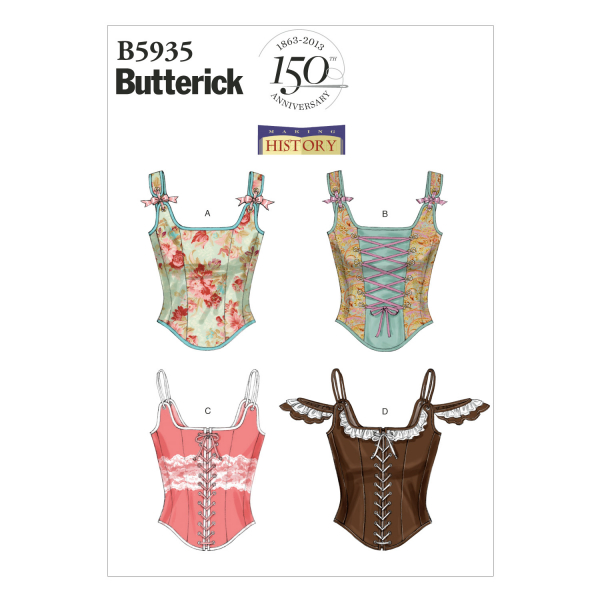
Butterick Sewing Pattern B5935 Misses’ Corset£10.00
-
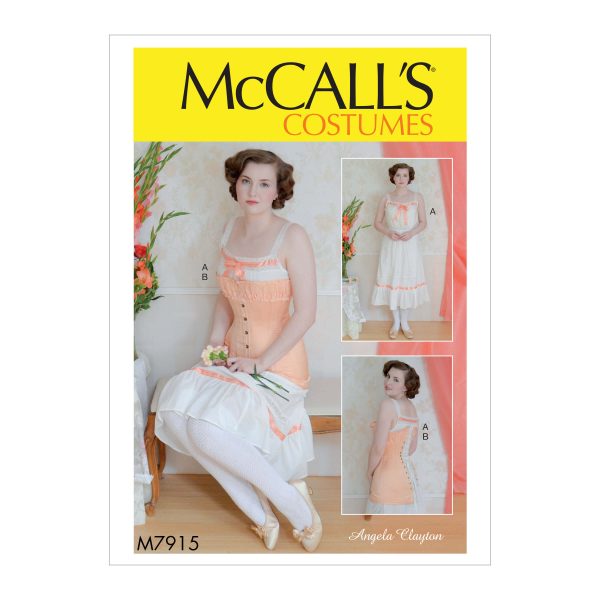
McCall’s Sewing Pattern M7915 Misses’ Costume by Angela Clayton£10.75
-
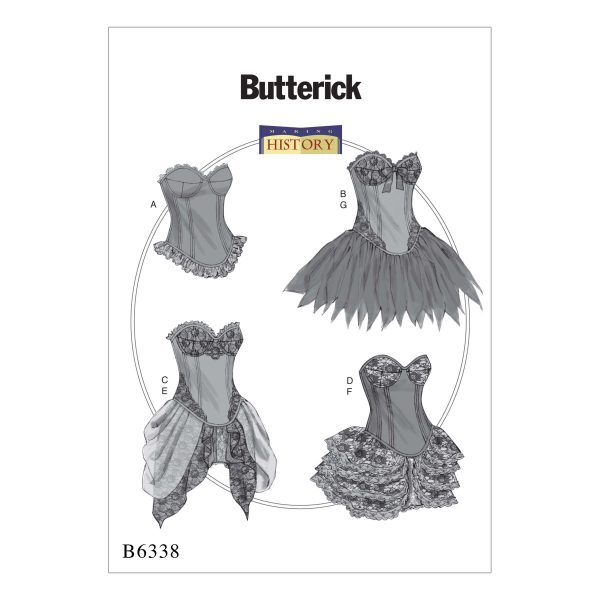
Butterick Sewing Pattern B6338 Curved-Hem Corsets and Skirts£10.00
-
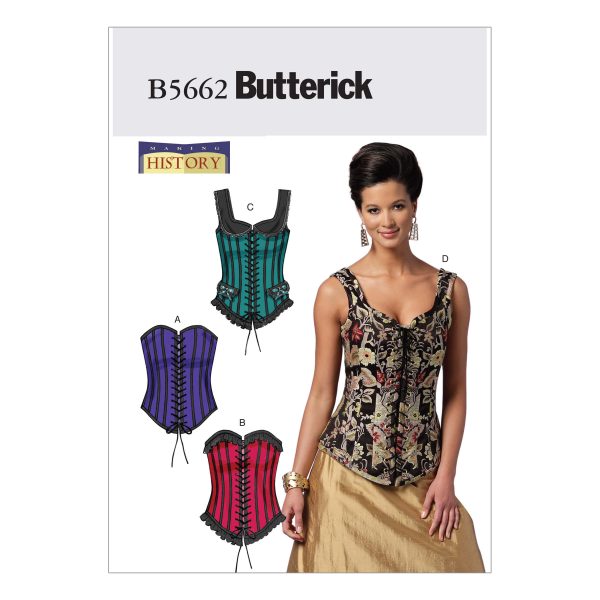
Butterick Sewing Pattern B5662 Misses’ Corsets
-
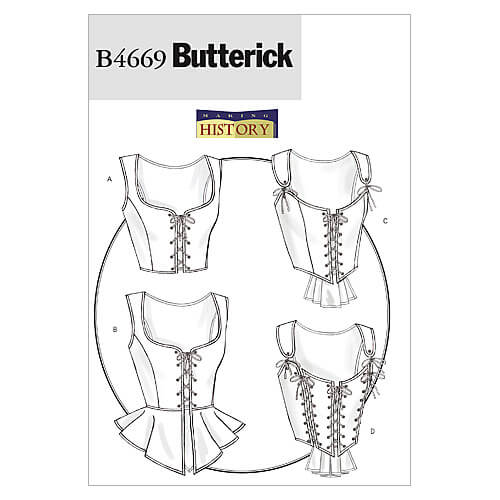
 Butterick Sewing Pattern B4669 Misses’ Corset
 -
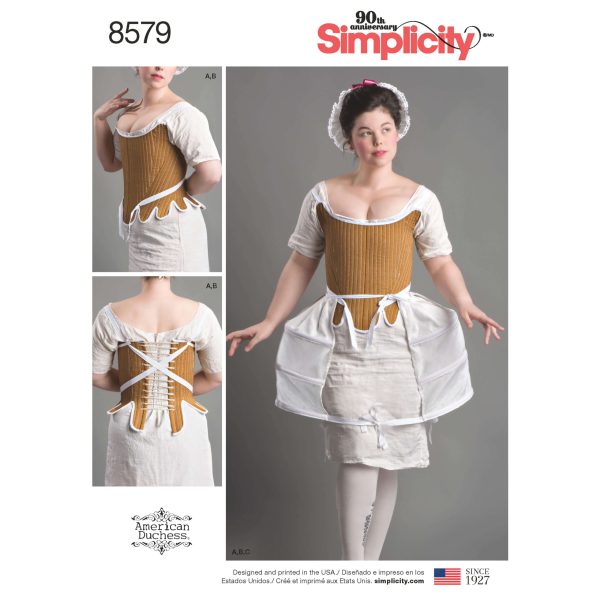
Simplicity Pattern 8579 Misses’ 18th Century Costume
-
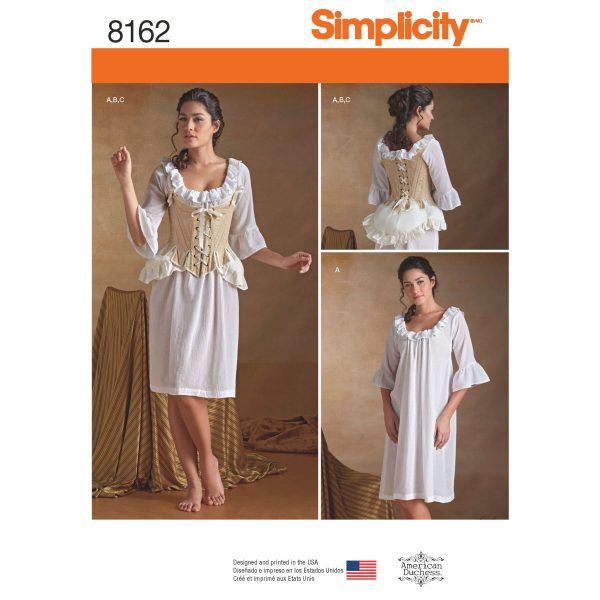
Simplicity Pattern 8162 Misses’ 18th Century Undergarments
-
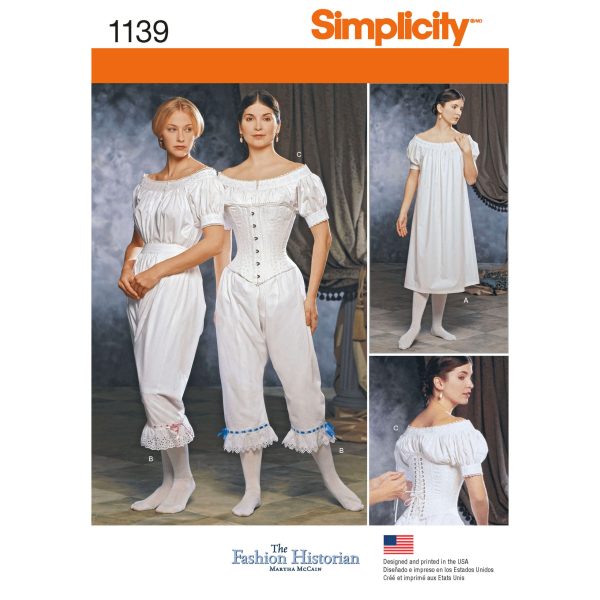
Simplicity Sewing Pattern 1139 Misses’ Civil War Undergarments
Top tips
Modern corsets provide support and shaping but with less extreme constriction. When picking a corset sewing pattern think about these elements: Do you want to use plastic or spiral steel boning? Plastic boning is less durable and may not provide sufficient support, especially for tight-lacing corsets. But steel boning may be too firm for some.
Corsets can be made with or without lacing details – Hook and eyes individually applied or sewn on a tape can create a smooth less bulky finish.
And remember if making an outerwear piece you can choose the most fun fabrics, but may need to interface or underline to make your fabric more robust.
Cosplay corset patterns
-
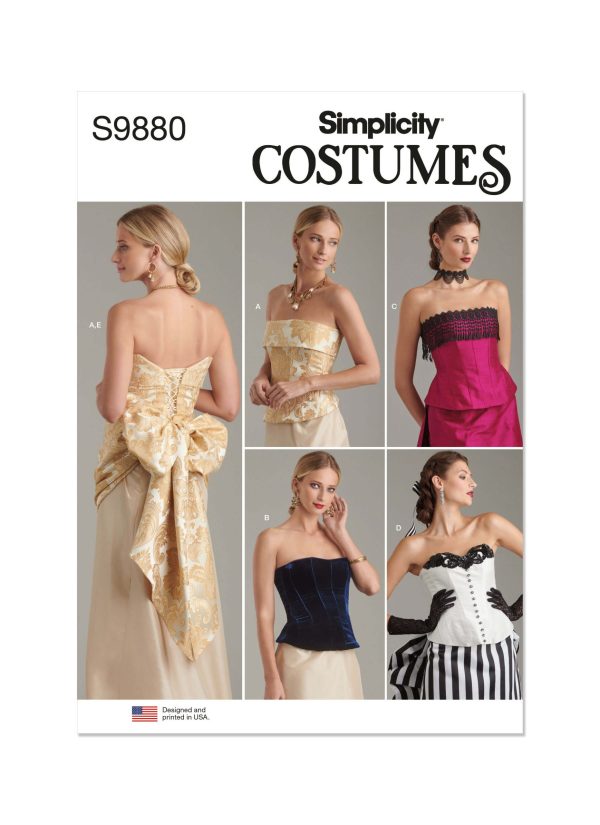
Simplicity Sewing Pattern S9880 Misses’ Corsets and Sash£10.75
-
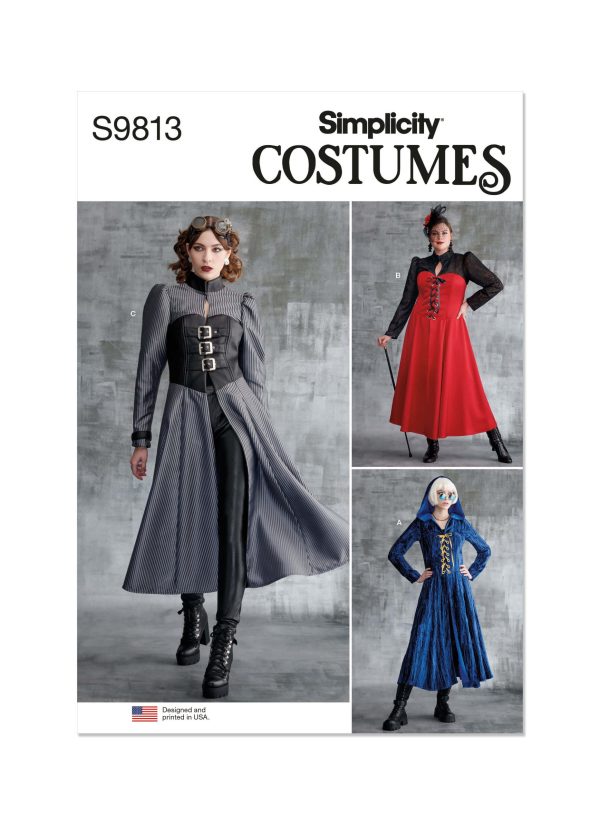
Simplicity Sewing Pattern S9813 Misses’ and Women’s Costumes£10.75
-
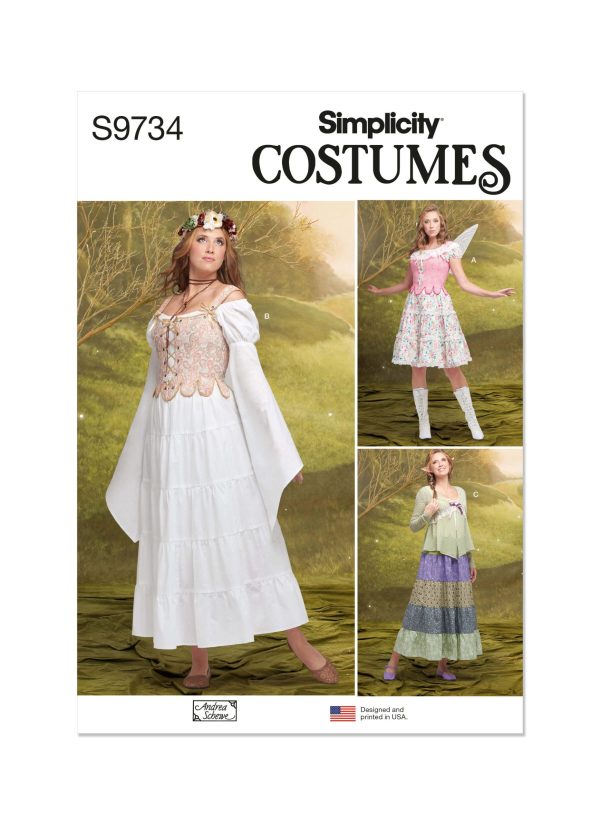
Simplicity Sewing Pattern S9734 Misses’ Costumes by Andrea Schewe Designs
-
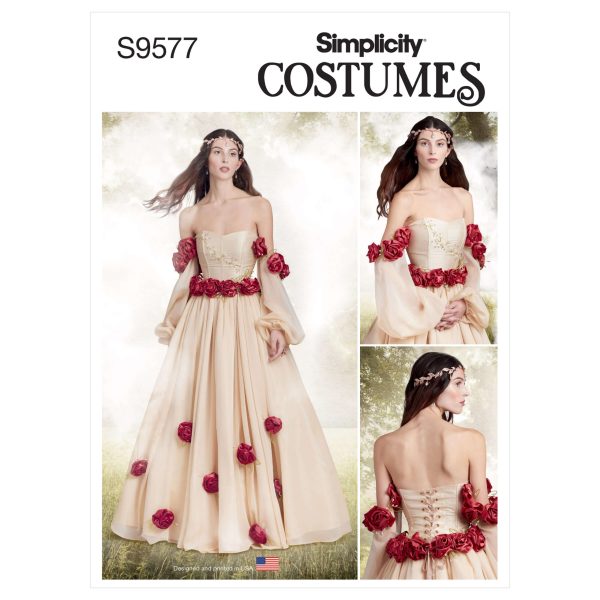
Simplicity Sewing Pattern S9577 Misses’ Fantasy Costume£10.50
-
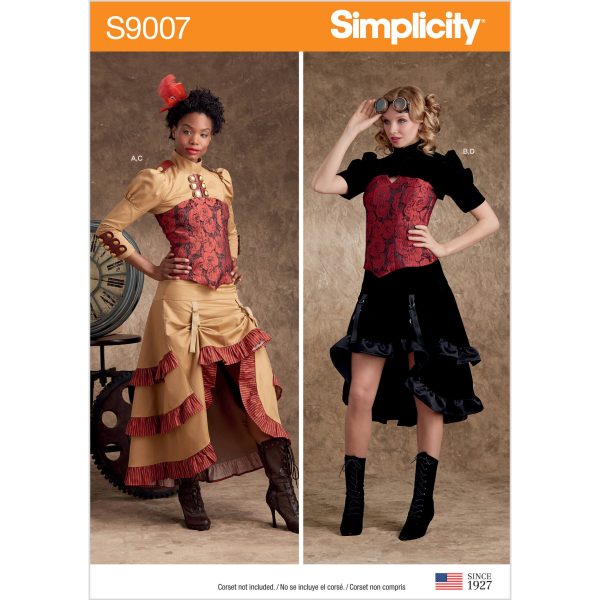
Simplicity Sewing Pattern S9007 Misses’ Steampunk Costumes
-
Simplicity Sewing Pattern S8971 Misses’ Fantasy Costume
-
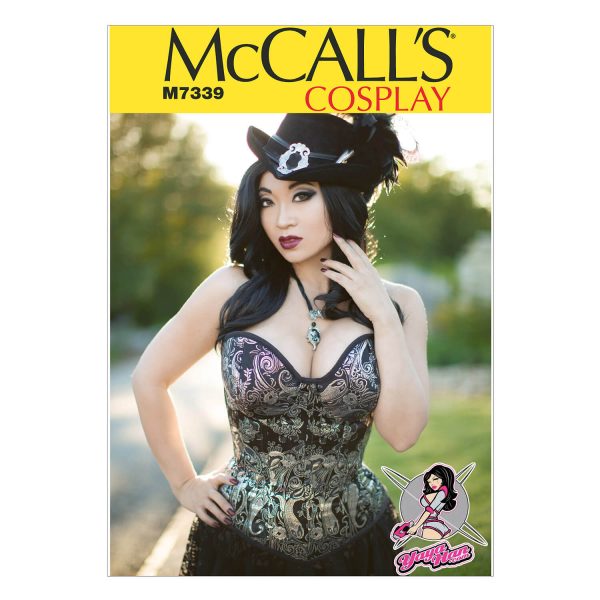
McCall’s Sewing Pattern M7339 Misses’ Overbust or Underbust Corsets by Yaya Han
-
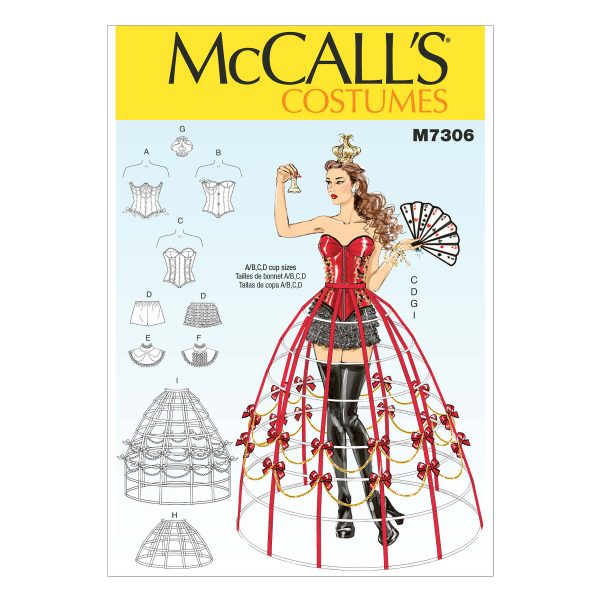
McCall’s Sewing Pattern M7306 Corsets, Shorts, Collars, Hoop Skirts and Crown