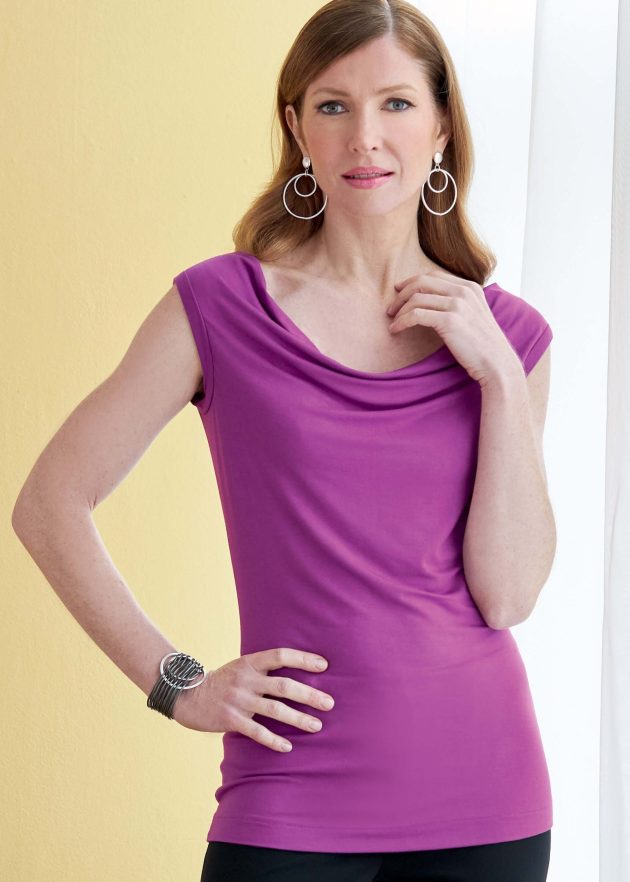
Hemming Stretchy Knit Fabrics (like Jersey)
Practice your jersey hemming skills with these tips!
Hemming knits are often the trickiest part because you need to make sure the openings to your garment stay stretchy enough to pull on and off your body. If you hem knit garments in the same way as you would a woven garment, the fabric may become wavy or the stitches may pop when you try to stretch the garment over your head.
BEFORE YOU START
Stabilisers
Stabilising the knit fabric you’re going to hem will significantly improve the outcome, especially if your knit fabric is lightweight. There are several options for stabilizing, such as knit stay tape, fabric spray starch you can wash out, or wash-away / tear-away stabilisers.
Raw edges
I also recommend finishing the raw edge for a neat finish even though jersey doesn’t fray, it can curl/roll so you’ll appreciate the aesthetics inside your garment. Use a zigzag stitch or an overcasting foot and stitch on your machine. Or use a overlocker or coverstitch machine if you own one.
The overcasting foot runs along the raw fabric edge then the overcasting stitch creates a robust triangle pattern that wraps around the raw edge replicating an overlocker stitch. It takes quite a while but is a handy method if you don’t own an overlocker.
Walking foot

A walking foot can provide extra support during construction and hemming. This special foot feeds both layers of fabric evenly through your machine at the same time. If you let the feed dogs pull the fabric through from underneath this can lead to one layer being stretched more than the other, disrupting your hem and leaving unsightly waves.
HEMMING METHODS
Zigzag stitch
Sewn with or without a walking foot, this is the easiest way to hem knits. The settings will match those used for construction, generally around 2.5 width x 2 length. You can also use a lightning bolt stitch (yes it really looks like a lightning bolt) or a triple stitch (looks like three lines sewn in a row) if your machine has these.
The lightning bolt is a modified zigzag that is created in a vertical way instead of the classic horizontal motion of the zigzag. Whereas the triple stitch goes back and forth over the top of itself creating a reinforced seam that’s essentially three times as strong but still very stretchy!
Blind Hem
That’s right, you can create a beautiful hem finish that’s invisible from the outside of your garment on knit fabrics too. You’ll need a blind hem foot which has a plastic guide to run along the folded edge and set your machine to the blind hem stitch setting. Working from the wrong side, the needle will catch all the layers periodically with a tiny stitch that’s not noticeable from the right side of the fabric, as long as you use coordinating thread.
Twin needle stitch

One of the best ways to hem stretch fabric is a top-stitched hem, using a twin needle. This has two needles on one shank and is inserted into the machine exactly the same way as any other needle.
You can get universal, ballpoint and stretch twin needles in different sizes and with different gaps between the needles. Choose the thickness of your needle to correspond to the thickness of your fabric. And the gap between the needles should be wider for thicker fabrics.
- Finish the edge and apply stabiliser if you wish. Turn up the hem allowance.
- Insert the twin needle into the shank. Set up your second spool pin and thread up each needle starting with the left side first.
- Both threads will run through the same path until the last hook.
Thread the eyes of the needles by hand (sorry, the auto needle threaders don’t work here). - Select a straight stitch with the needles in the centre position and test the stitch on some scrap fabric. If you find a little hump or ridge is appearing between the needles, try loosening the top tension a little at a time.
- If the ridge persists this is known as tunnelling. It means your needles may be too close together for your chosen fabric.
- Once satisfied, sew with the right side of the garment facing up – on the top you’ll get two perfectly parallel rows of stitching and on the underside a zigzag created by the bobbin thread switching between the two top threads.
- Try to line your stitching on top of the raw edge finish you created in step 1 for a neat finish inside, disguising the layers of threads.
Overlocked hems
One interesting option if you have an overlocker is the ability to create beautiful, rolled hems. Here the settings are adjusted to roll the fabric as it passes under the machine, encasing the fabric in a small, fine-stitch pattern. This is perfect for hemming delicate fabric but can also be used on jersey fabric. This method works best when the thread colours complement or blend with your fabric as the stitches are fully visible on the right side of the fabric.
Another option it to create a lettuce hem, so called because it resembles the wavy leaves of a lettuce. It’s an acquired taste, not often seen on ready to wear garments but can be a fun creative finish on home sewn clothes.
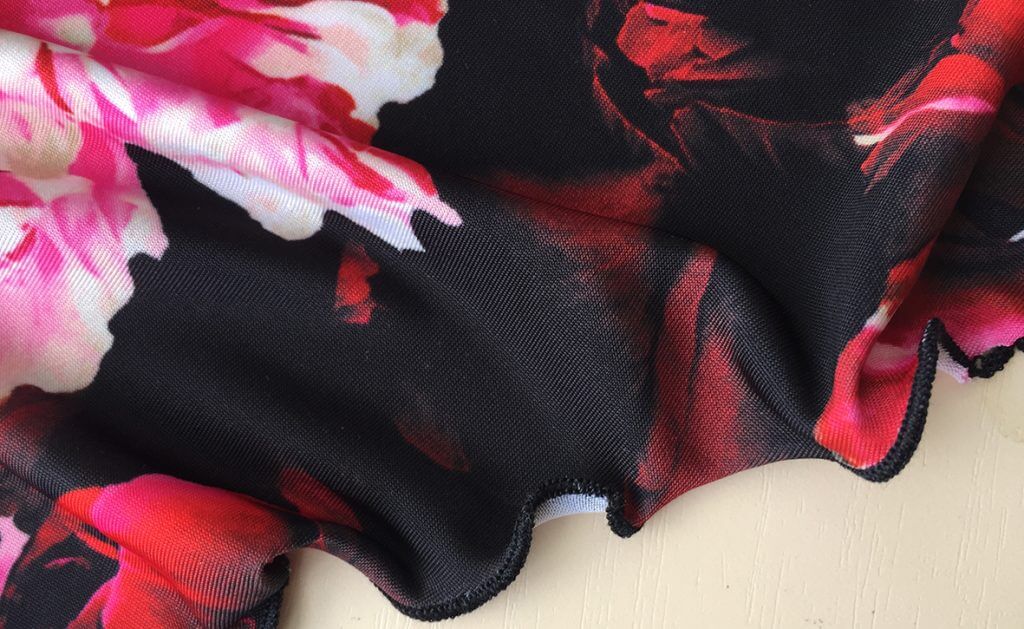
Coverstitch machine
Most people use coverstitch machines to achieve the traditional stitch finish seen on ready to wear jersey clothes – where you see two rows of stitching on the front of the hem, and a chain stitch on the back similar to what you’d see with an overlocked seam.
Getting a coverstitch machine is not for the occasional dressmaker, and you will likely need to be passionate about sewing jersey fabric to get one. There are models with different numbers of needles, and some hybrid machines that can be an Overlocker and Coverstitch machine in one. Either way, this will be an investment and you may want to think about what kind you need before buying.
Fabric bands
Last but not least, if you’re really scared of hemming knits… don’t! You can use a fabric band to finish the raw edge. Traditionally seen on sweatshirts and ringer tshirts, you could draft a pattern piece to finish off any knit hem. This piece would be twice the depth of the finished band and the same circumference of the hem when assembled. Folded wrong sides together and matching the bands raw edges with the raw edge of the garment, you’ll sew in place and then press down so the seam allowance sits flat on the inside.
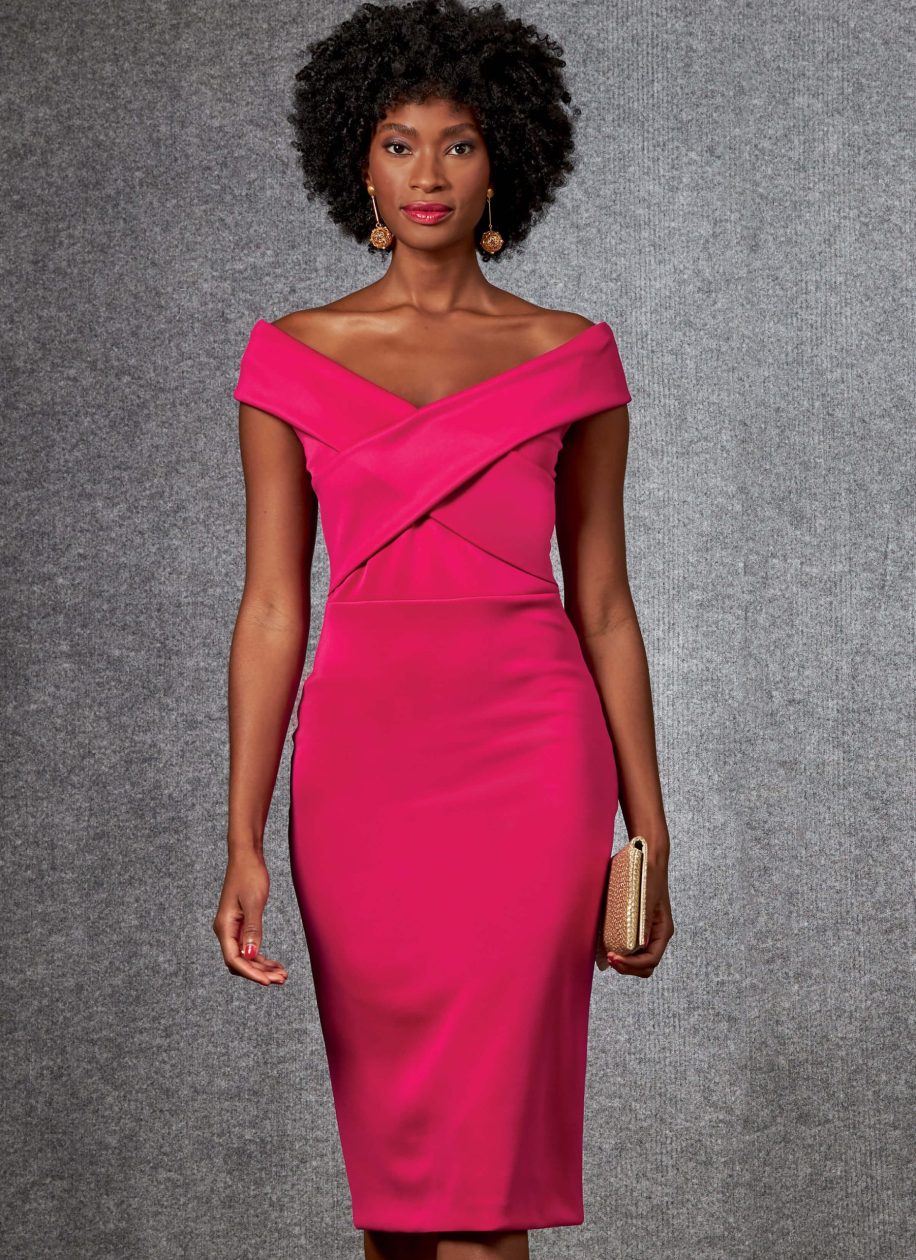
Master blind hem stitching with the Vogue Patterns 1674 dress
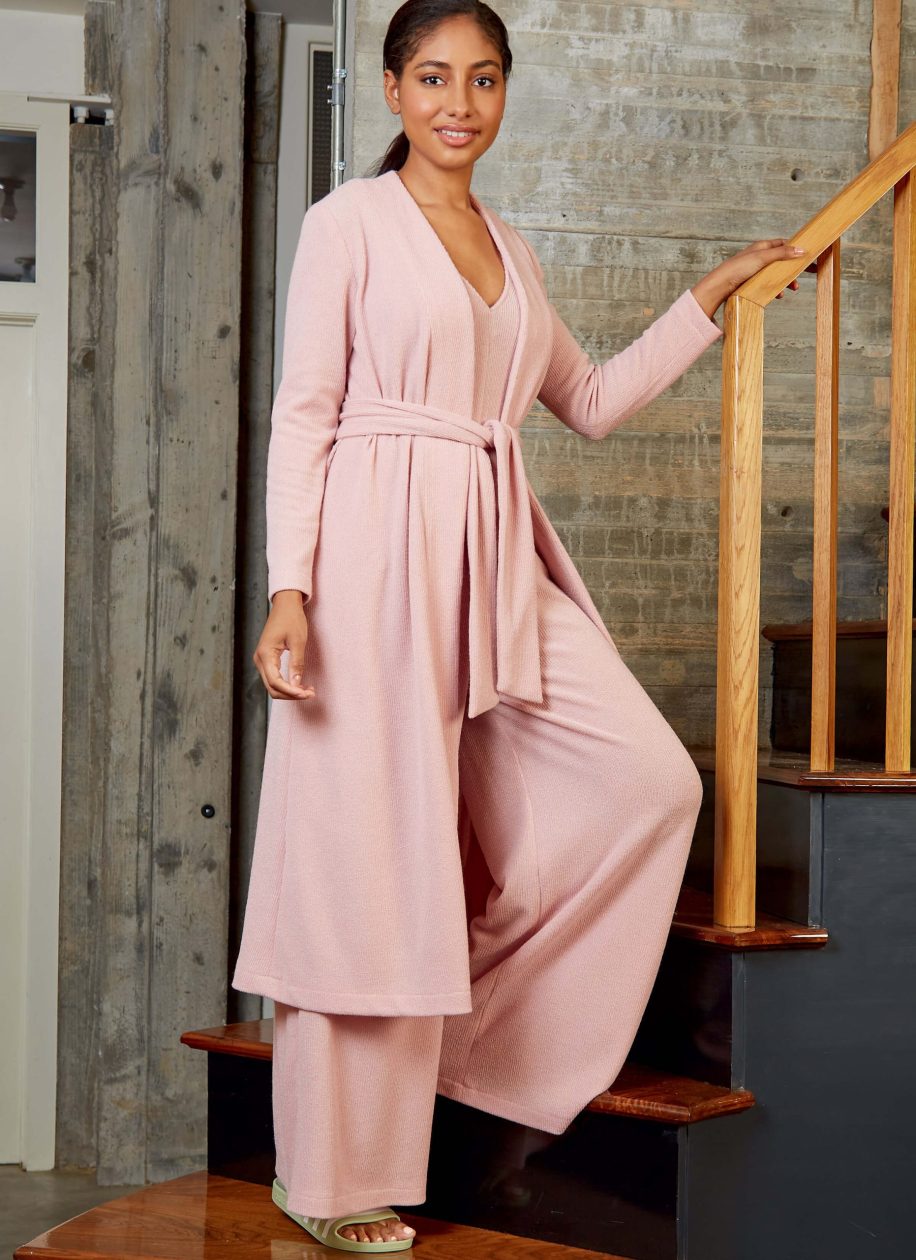
Try using a twin needle to finish the hems of the M8245 sleep set
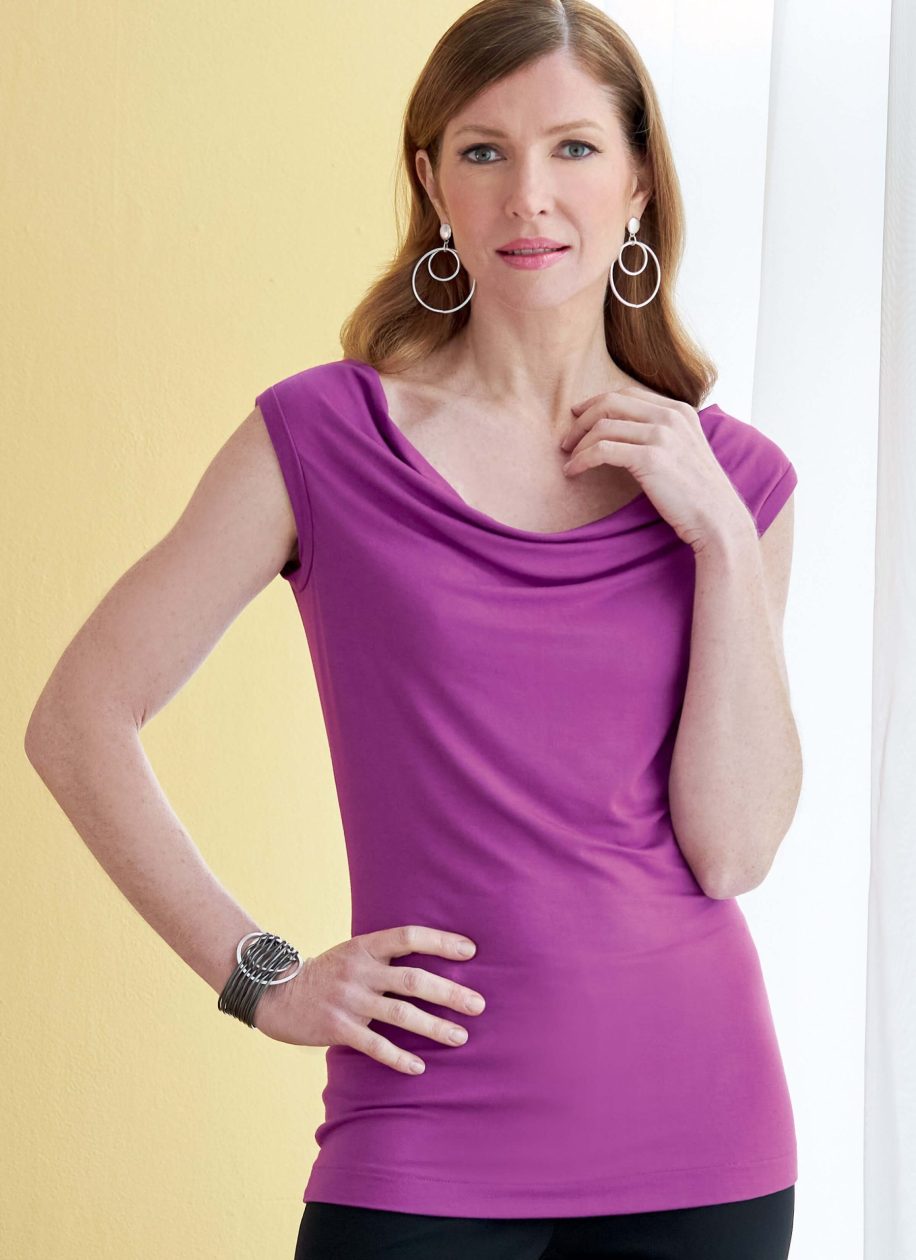
A classic stretch stitch sewn on your machine will finish B6847 beautifully
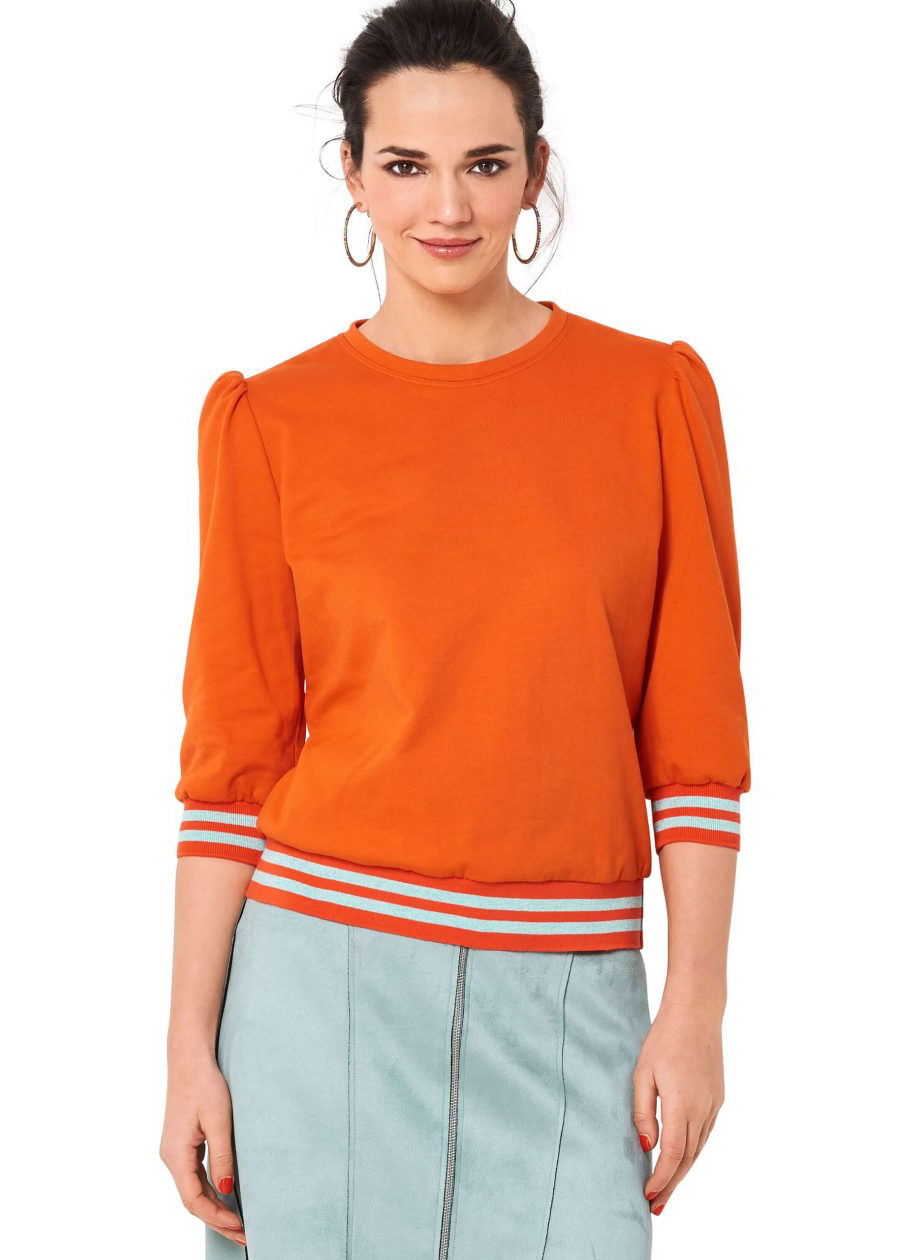
Burda 6109 lets you use bands to finish your knits until you’re ready to practice hem stitching